What Does a Commercial Gelato Machine Actually Do?
If you run a cafe, restaurant, bar, or hotel, you have probably thought about adding gelato to your menu. The next question is usually practical: what does a commercial gelato machine actually do, and is it more than a fancy freezer?

It is a lot more. A good machine handles several jobs that would normally need separate equipment and extra staff. Here is a plain breakdown of how it works and what it means for your business.
What Is a Commercial Gelato Machine?
A commercial gelato machine is a piece of equipment built to make, store, and serve gelato in a business setting. Unlike a home ice cream maker, it is designed for daily use, steady output, and food safety standards.
Most commercial machines combine three or four functions in one unit. That saves space, labor, and money, which matters if you only have a small counter or a tight kitchen.
The Main Jobs a Gelato Machine Does
1. Mixing and Aging the Gelato Base
Every batch of gelato starts with a base, which is a blend of milk, cream, sugar, and flavor. Before freezing, the base needs time to rest and cool. This is often called aging.
Aging lets the ingredients blend properly and improves texture. A commercial machine can hold and condition the mix at the right temperature, so you do not need a separate tank or fridge for this step.
2. Batch Freezing
This is the heart of the machine. The base is churned while it freezes, which turns liquid into smooth, creamy gelato.
The churning speed and freezing power decide how the final product feels. Fast, steady freezing creates small ice crystals, and small ice crystals mean a silky texture instead of an icy one. A commercial machine does this reliably, batch after batch.
3. Storing the Gelato at the Right Temperature
Once the gelato is ready, it needs to stay at the right serving temperature. Gelato is served slightly warmer than regular ice cream, which is part of why the flavor tastes so clear and the texture feels soft.
A commercial machine holds the finished gelato in a temperature-controlled space. You do not have to move it to a separate freezer and wait for it to soften again.
4. Displaying and Serving
Many commercial machines also work as a display. Customers can see the gelato being made and served from the same unit.
This matters more than it sounds. People stop to watch, ask questions, and often buy on impulse. The machine becomes part of your sales area, not just something hidden in the back.
Why Fresh Gelato Sells
Customers notice the difference between fresh gelato and something scooped from a pre-packed tub. Fresh gelato looks better, tastes brighter, and feels more special.
Making it on site also gives you control. You choose the flavors, adjust the menu with the seasons, and offer something nearby competitors cannot copy easily. For a coffee shop, that might mean an affogato. For a restaurant, it could be a dessert that finishes the meal. For a hotel, it can be a simple treat that guests remember.
Do You Need Special Skills to Use One?
Not necessarily. Traditional gelato making takes training, but modern systems have made it much simpler. Some businesses use powder mixes, where you add water or milk and follow the machine’s process. Others use ready-made liquid gelato, which you pour in and churn. Liquid options can be ready to serve in about 15 minutes of churning, with no measuring and very little cleanup.
If you are new to gelato, this is a big advantage. Your staff can learn the routine quickly, and your quality stays consistent from one day to the next.
Types of Commercial Gelato Machines
Machines come in different shapes and sizes, so you can pick one that fits your space and how you plan to sell.
- Free standing machines: Larger units that can handle higher volume. A good fit for dedicated gelato shops and busy restaurants.
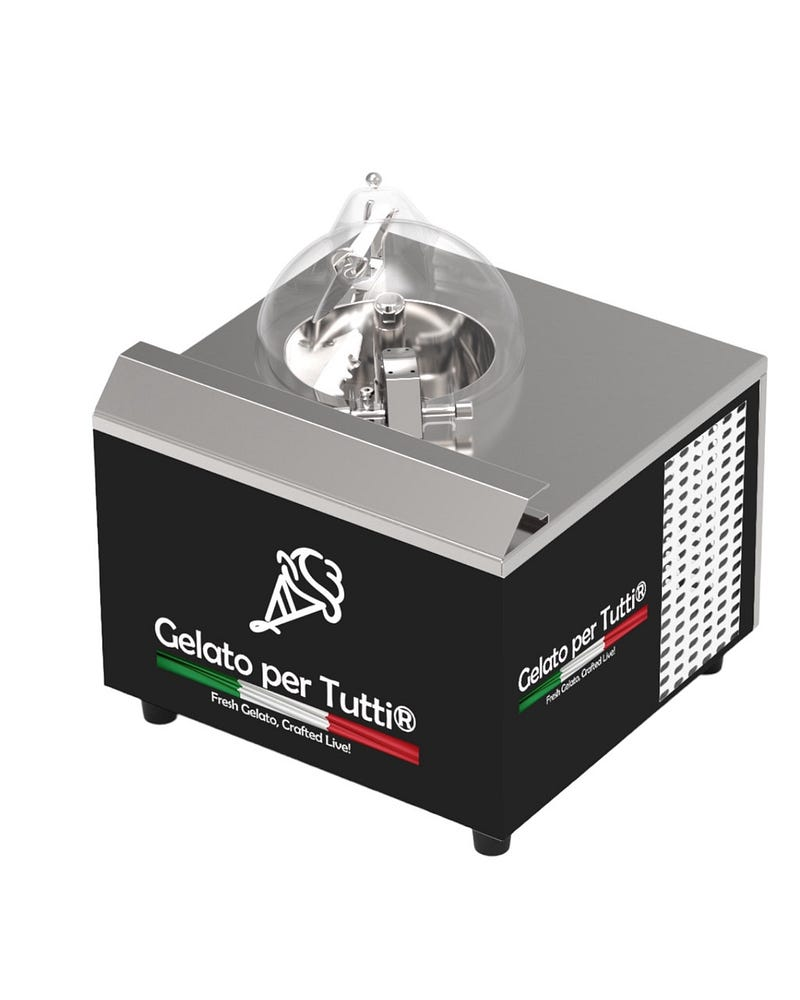
- Countertop machines: Compact units that sit on a counter. Ideal for cafes, bars, and small shops with limited room.
- Mobile gelato carts: Machines on wheels, built for events, outdoor locations, and seasonal sales.
Before you buy, think about how much gelato you expect to sell, how much space you have, and whether you need to move the machine around.
What to Look for Before Buying
Not every machine suits every business. A few simple questions help you choose well:
- How many servings do you expect to sell on a normal day and on a busy day?
- Do you have the counter or floor space the machine needs?
- Is cleaning and daily care easy for your team?
- What kind of support and warranty comes with it?
- How long will it take to earn back the cost? A return on investment calculator can help you estimate this.
Taking a few minutes to answer these questions can save you from buying a machine that is too big, too small, or too hard to maintain.
Is a Commercial Gelato Machine Worth It?
For many businesses, yes. Gelato has strong margins, it appeals to a wide range of customers, and it is easy to add to an existing menu. A machine that handles mixing, freezing, storage, and display in one place also reduces the equipment and labor you need.
The key is choosing the right machine for your space and your volume, and starting with a menu you can run smoothly every day.
Final Thoughts
So, what does a commercial gelato machine actually do? It ages the mix, freezes it into smooth gelato, keeps it at the right serving temperature, and shows it off to your customers, all in one unit. For a small business, that means fresh dessert, less hassle, and a new way to bring people through the door.

Comments
Post a Comment