Pour-n-Serve vs Mix-n-Serve Gelato: Which Fits Your Labor and Budget?
Pour-n-serve (liquid) gelato is the better fit if labor, speed, and consistency matter most, because it arrives ready to churn with no mixing or measuring. Mix-n-serve (powder) gelato is the better fit if you want lower ingredient cost per batch and have staff who can follow a precise process. The right choice depends on your team, your volume, and how you value time.
Both formats aim for the traditional qualities of Italian gelato: a denser texture than standard ice cream and a smooth, rich mouthfeel served slightly warmer. If you want the background, the Wikipedia article on gelato gives a clear overview of its history and how it differs from other frozen desserts.
If you run a café, restaurant, or dessert shop, the base you choose shapes your daily workflow more than almost any other decision. It affects how many minutes your staff spend on prep, how consistent your gelato tastes, and how much you spend per serving. This guide compares both options so you can pick with confidence.

What Is Pour-n-Serve Gelato?
Pour-n-serve gelato is a liquid base that comes ready to use. You pour it into the machine, churn, and serve. There is no mixing, no adding milk, and no measuring. Liquid bases are typically shelf-stable UHT products, which means they can be stored without refrigeration until opened, then refrigerated according to the label.
The main appeal is simplicity. A new employee can run a batch after a short walkthrough, and the result looks and tastes the same on a Tuesday morning as it does on a Saturday rush.
What Is Mix-n-Serve Gelato?
Mix-n-serve gelato starts as a dry powder. Your team combines it with a liquid such as water or milk, following the manufacturer’s ratio, then processes it in the machine. Powder bases are light, compact, and easy to store, which makes them popular with operators who care about shelf space and ingredient cost.
The tradeoff is hands-on work. Every batch depends on accurate measuring, thorough mixing, and correct temperatures, so results are only as consistent as the person making them.
Labor: Where the Biggest Difference Shows Up
Labor is the hidden cost in most gelato programs. With powder, someone has to weigh ingredients, mix them properly, and clean the extra containers and tools. With liquid, that prep step disappears, so staff spend their time serving customers instead.
Consider how your shop actually runs. If you have a small team, high turnover, or one person covering the counter and the kitchen, a ready-to-churn base removes a task that is easy to get wrong. If you have a dedicated production person or a trained gelato maker, powder adds little burden.
Liquid also shortens your cleanup. Fewer mixing steps mean fewer tools to wash, and less chance of residue buildup. If equipment care is a priority for you, your cleaning routine matters regardless of which base you use.
Consistency and Quality Control
Consistency builds repeat customers. A powder base can produce excellent gelato, but small errors in measurement, water temperature, or mixing time can change texture. A liquid base is formulated in a controlled setting, so most of that variation is removed before the product reaches you.
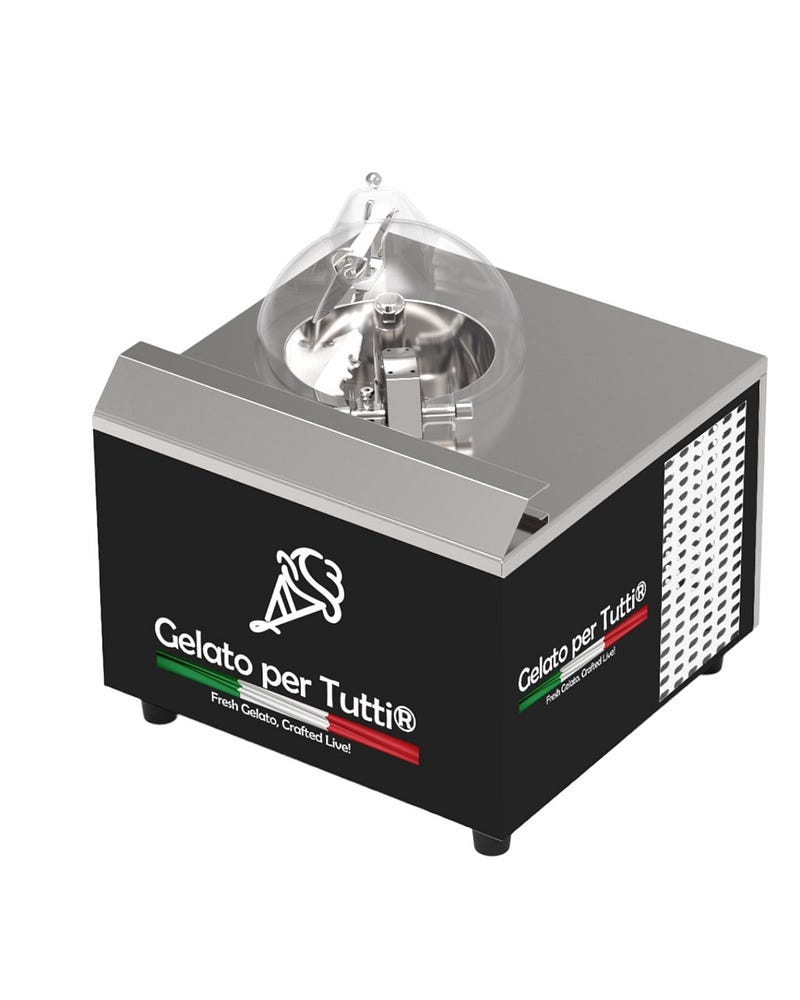
For a single-location owner who personally oversees every batch, this may not matter. For a multi-location operator, a franchise, or a business with rotating staff, predictable results are a major advantage. The pour-n-serve liquid gelato range from Gelato per Tutti is built around this idea: efficient service with no mixing or measuring involved.
Budget: Looking Beyond the Price Per Unit
Powder often looks cheaper on paper. A bag of powder costs less to ship and store, and the cost per serving can be lower when you do the math on ingredients alone. But ingredient cost is only one part of the picture.
A fair comparison includes four things. First is labor time per batch, multiplied by your hourly wage. Second is product waste from mixing errors or inconsistent batches. Third is the cost of additional ingredients such as milk. Fourth is the training time needed to get new staff up to speed.
For a high-volume shop with trained staff, powder can deliver strong margins. For a lower-volume or labor-limited shop, the time saved with liquid can offset a higher ingredient cost, and the simplicity can reduce waste. Run your own numbers using your actual wage, batch size, and daily sales, because the winner changes from business to business.
Storage and Space
Powder takes up less room and is easy to stack, which helps if your storage is tight. Liquid bases take more space per batch, but unopened shelf-stable UHT products do not need refrigeration until opened. Check the label for storage and handling instructions, and plan your fridge space for opened containers.
Flavor Flexibility
Both formats can support a wide menu. Powder bases make it simple to stock many flavors in a small footprint, which suits operators who like to rotate seasonal options. Liquid bases keep flavor development off your plate, since the work has been done for you. Think about whether your customers want a large rotating menu or a tight list of reliable favorites.
Which One Should You Choose?
Choose pour-n-serve liquid gelato if you want fast training, minimal prep, consistent results, and a simple workflow. It suits cafés, restaurants, hotels, and shops where gelato is one part of a bigger menu.
Choose mix-n-serve powder gelato if you have a trained team, want to control ingredients closely, and prioritize lower cost per batch and compact storage. It suits dedicated gelaterias with production staff and steady volume.
If you are undecided, start with the option that matches your biggest constraint. If that constraint is time and staffing, go liquid. If it is ingredient cost and space, go powder.
Frequently Asked Questions
Is liquid gelato better than powder gelato?
Neither is better in every case. Liquid wins on speed and consistency, while powder wins on ingredient cost and storage space.
Which gelato base is easier for beginners?
Pour-n-serve liquid is easier, since it needs no measuring or mixing.
Is powder gelato cheaper than liquid gelato?
Powder often costs less per serving in ingredients, but total cost depends on labor, waste, and training time.
Do I need a special machine for each type?
Check the specifications of your machine and product before buying, and confirm compatibility with your supplier.
Can I use both types in the same shop?
Yes. Some operators use liquid for core flavors and powder for seasonal specials, as long as staff are trained on each process.

Comments
Post a Comment